|
|
 |
 |
 |
|
|
 |
| |
| |
 |
| |
| Automatic filters designed specifically for full flow filtering of lubrificating oils for trunk piston and crosshead engines and full-flow filtration of the heavy fuel oils used in modern two-stroke and four-stroke diesel engines. |
|
|
 |
|
| |
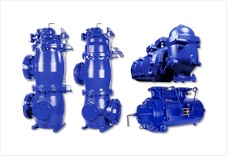
Alfa Laval automatic lube oil filter systems are designed specifically for full-flow filtering of the lubricating oils used in trunk piston and crosshead engines.
This extremely effective filtering prevents contaminants from entering sensitive parts of the engine, thus reducing engine wear and boosting durability.
The compact, space-saving design makes them easy to install and to retrofit as upgrades to existing installations.
There are three main types of Alfa Laval lube oil filter, all with an automatic backflushing system.
The X type is designed for use with crosshead engines, the T type for use with trunk piston engines and the CCU (Combined Cleaning Unit) type for use with trunk piston engines of up to 5,000 kW in capacity.
Certain X and T models are available with a special diversion chamber that collects any particles backflushed from the full-flow chamber, acting as an automatic, maintenance-free sludge treatment system.
The CCU type actually supplements the full-flow automatic filter with another distinct high-performance technology – a special disc stack centrifuge for removing particles from the oil flushed out of the filter, so this oil can be returned to the engine sump.
The continuous backflushing that is a core feature of the Alfa Laval automatic lube oil filter system prevents any solids adhering to the filter surfaces – which means no manual cleaning of filter elements is required.
These filters therefore operate with more than 12,000 operating hours between cleaning and inspection.
In addition, there is only a low, constant pressure drop across the filter elements, reducing any risk of them cracking, and there is no pressure drop during backflushing.
This near-constant pressure in the engine’s lubricating oil system also makes it easier to detect any malfunctions, simply by registering pressure changes.
|
|
|
|
 |
|
 |
|